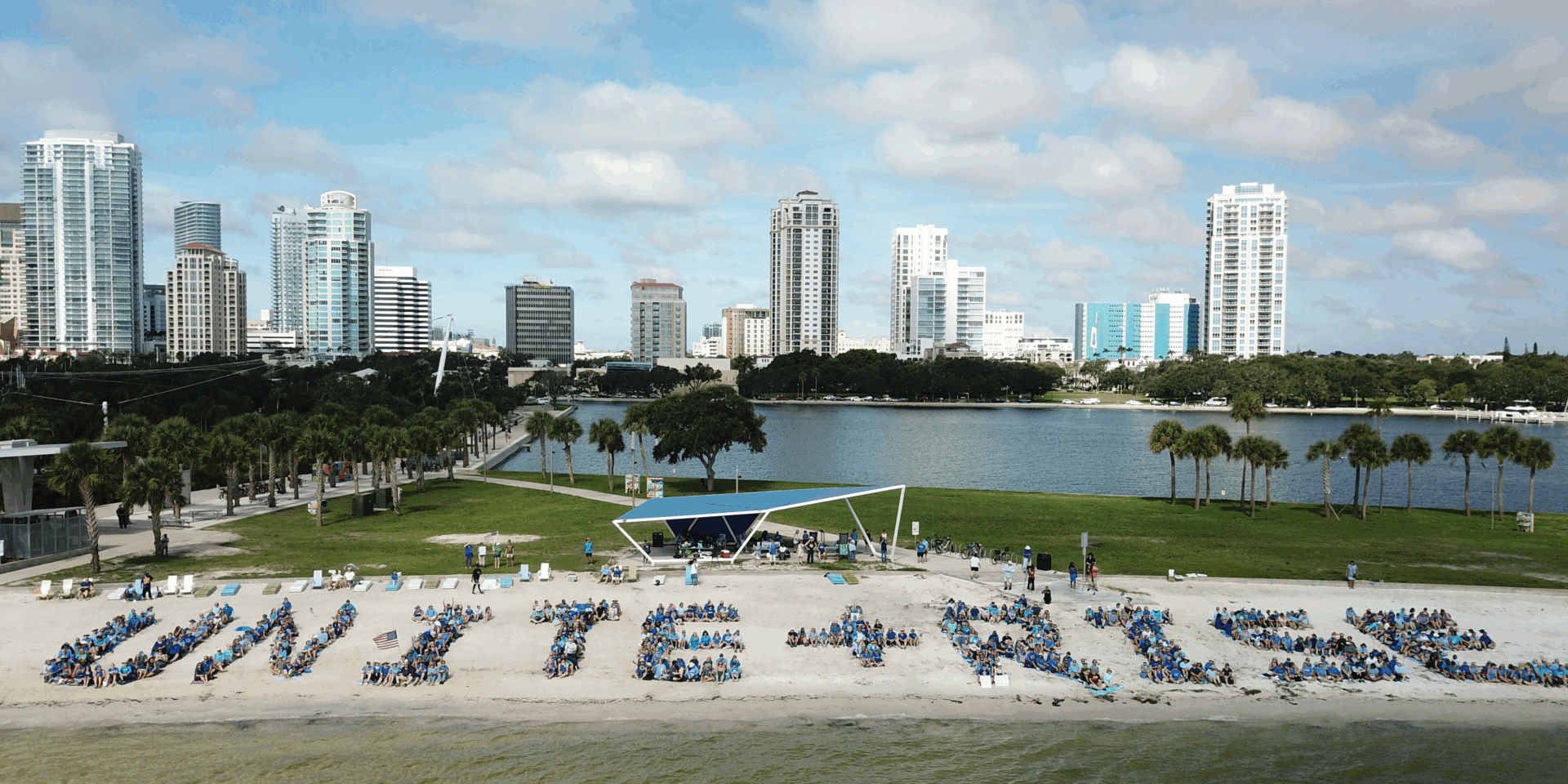
LWVSPA Supports GO Bond Referendum
Posted 10/21/2026
On their ballots this election season, St. Petersburg voters are being asked to decide on a $600 million General Obligation (GO) bond referendum to fast-track city flood protection and water infrastructure. The bond would fund the St. Pete Agile Resilience (SPAR) program to accelerate stormwater, wastewater, and potable water projects. The League of Women Voters of the St. Petersburg Area (LWVSPA) has formally stated its support of the GO bond.
The League, Suncoast Sierra Club and Council of Neighborhood Associations (CONA) heard voters’ concerns about how the bond proceeds will be spent. The groups worked with the City administration and the HERS committee of the City Council. As a result, the City Council approved two citizen-led committees, (1) a committee to oversee how the bond funds are spent, and (2) a committee to ensure sustainable and natural alternatives are considered if the bond is approved.
The GO bond is designed to accelerate efforts in flood mitigation, coastal adaptation, and sustainable, long-lasting infrastructure. By front-loading funding for these complex projects, the bond makes it possible to fast-track improvements that will benefit all residents, not just those in flood zones, and minimize the economic impacts of future inflation on construction costs.
City of St. Petersburg public works administrator Claude Tankersley recently joined St. Pete Catalyst publisher Joe Hamilton Tuesday evening for a livestreamed community conversation on the topic. The event was hosted in partnership with LWVSPA.
“Instead of just patching up problems after they happen and fixing yesterday’s infrastructure,” Tankersley explained, “SPAR is about getting our stormwater, wastewater, and drinking water systems ready before the next big storm or flood event happens.”
He added that projects targeted by the SPAR initiative will lead to fewer sewer backups and spills, more reliable water and drainage services, stronger protection for City facilities, and faster recovery times when an issue happens. While clarifying that SPAR does not guarantee a city without risk to these systems, “We’re going to take a very disciplined, deliberate effort to reduce those risks before the next storm happens,” Tankersley explained.
Currently, SPAR initiatives are paid for through resident utility rates. Tankersley noted that the GO bond would provide additional capital so that priority efforts can be completed about five years more quickly than under the current funding structure alone.
Tankersley and his staff estimate that the GO bond would be more cost-effective than a utility rate hike for about 89 percent of the properties in the city, both homestead and non-homestead.
All residents, including those with properties in non-flooding areas, will benefit from the initiative, Tankersley emphasized. “Sixty percent of the work will go toward making sure that our water and wastewater systems are strong and can continue to provide service.”
To learn more about the SPAR initiative and proposed projects, visit this link.
Click here or on the video thumbnail to view a recording of the conversation and here to read St. Pete Catalyst’s follow-up article on the GO Bond initiative.