A Firsthand Look at Geothermal Cooling in Pinellas County
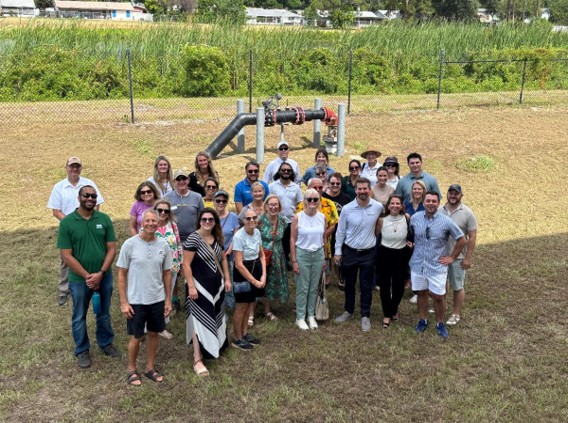
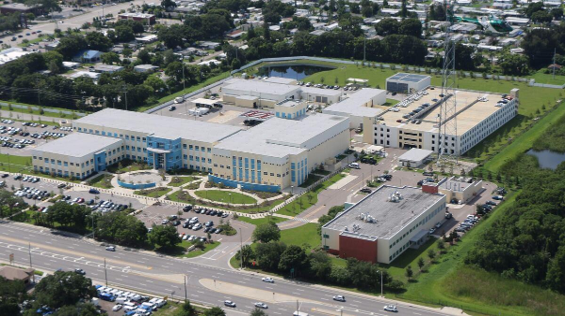
On a sweltering summer day, our group arrived at the Pinellas County Emergency Operations Center (the “Center”) in Largo to learn about one of the region’s most successful geothermal cooling systems. Councilmember Floyd took time from his vacation week to join us. Standing in the shade of a tree, the facilities manager pointed to two arched pipes emerging from the ground near the parking lot. These wells cycle groundwater from the Florida aquifer to cool the large facility.
As we entered the mechanical building behind the Center, a blast of cold air greeted us. “It’s working!” one tour member joked, drawing laughter from the group. Inside, the heart of the geothermal system consists of a series of pumps and tanks housed in an immaculately clean building. Groundwater is returned to the aquifer only a few degrees warmer and without any added chemicals or contaminants.
Jay Egg, the engineer who designed the system, explained that the county originally planned to install conventional cooling towers, but the 80,000 square foot building would have consumed several million gallons of water each year through cooling tower evaporation. Instead, Pinellas County officials chose geothermal cooling.
The facilities manager enthusiastically endorsed the decision, citing lower maintenance, protection of the equipment from storm damage, and greater reliability—critical advantages for a facility that serves as the county’s emergency command center during disasters and the 911 center year round.
One surprising feature was the quiet. The only noticeable noise came from a nearby medical services building that still uses conventional cooling and is scheduled for conversion to geothermal.
Afterward, we had lunch at the House of Vegano and toured the law offices on Central Avenue in St. Petersburg, where a geothermal cooling system has operated successfully for more than 14 years. The tour reinforced the benefits of geothermal technology: water conservation, quiet operation, lower maintenance, and energy efficiency. Participants agreed that geothermal systems should be evaluated for future public projects, including redevelopment of the historic gas plant site.